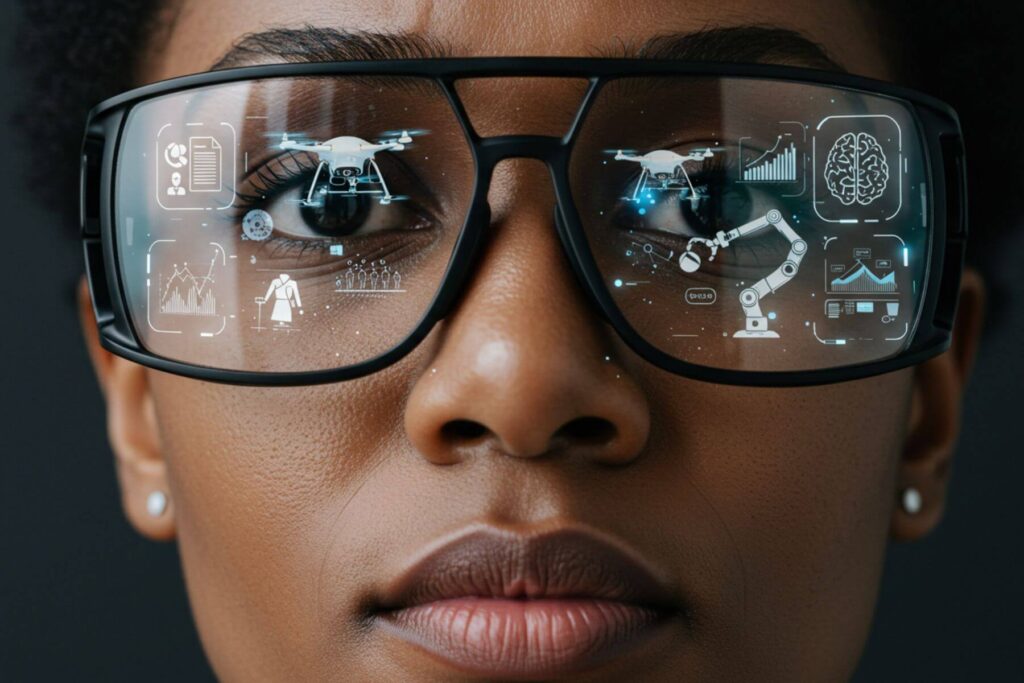
Artificial intelligence is no longer limited to science labs or Silicon Valley startups. In 2025, AI is reaching far beyond the tech world, reshaping industries that once relied heavily on manual labor, tradition, or human instinct. From farming to fashion, AI is unlocking new levels of efficiency, personalization, and innovation. This article explores ten surprising industries being transformed by AI in 2025, showing just how far its influence has spread.
1. Agriculture
One of the most unexpected areas seeing rapid change through AI is agriculture. In 2025, farms are no longer just soil and tractors; they are smart, data-driven ecosystems. AI is helping farmers monitor crop health through satellite imagery and drone surveillance. Smart irrigation systems adjust water flow automatically, and machine learning models predict pest infestations before they happen. AI-driven robots are now planting seeds, identifying weeds, and harvesting crops with incredible precision. These advancements are not just making farming easier, but also helping to reduce waste, conserve water, and feed more people sustainably.
2. Legal services
Traditionally seen as a field built on human reasoning and experience, the legal industry is now being reshaped by AI. Legal research, once a time-consuming task, is now accelerated by AI tools that can scan thousands of legal documents and cases in seconds. In 2025, many law firms use AI to draft standard contracts, identify legal risks, and even assist in predicting case outcomes. This allows lawyers to focus more on strategy and human interaction while cutting down on billable hours for repetitive tasks. AI is also making legal services more accessible, allowing people to get help with things like wills, rental agreements, and small claims through AI-powered platforms.
3. Construction
Construction sites in 2025 look very different from just a few years ago. AI is being used to analyze building plans, manage supply chains, and monitor safety in real time. Drones capture aerial views of job sites and send data to AI systems that detect delays, inefficiencies, or structural risks. Smart helmets now alert workers of potential dangers through AI-powered sensors. Some companies are using AI to create 3D-printed structures and automate parts of the building process. These advances are leading to faster construction timelines, fewer accidents, and reduced project costs.
4. Fashion and design
The fashion world is embracing AI in surprising ways. In 2025, designers are using AI tools to predict fashion trends, create virtual prototypes, and even generate new clothing ideas from scratch. AI scans millions of social media posts, retail sales data, and cultural events to forecast what styles will be popular next season. Some brands use AI to personalize shopping experiences, suggesting outfits based on a customer’s body shape, style, and previous purchases. AI-generated fashion shows and virtual fitting rooms are now common, offering consumers a futuristic and interactive shopping journey.
5. Journalism and media
AI is transforming journalism faster than ever. Newsrooms are now relying on AI to assist with fact-checking, summarizing complex topics, and even writing basic news reports. In 2025, sports scores, financial updates, and weather forecasts are often generated by AI systems that can write articles in real time. Natural language processing tools help editors sift through massive amounts of data, social media, and user comments to understand trending stories. AI is also improving video production, allowing small media teams to create professional-quality content using automated editing, voiceovers, and subtitles.
6. Mental health and therapy
While therapy might seem like a deeply personal experience, AI is playing a growing role in the mental health industry. In 2025, virtual therapists powered by AI are providing support to people who might not otherwise seek help due to cost, stigma, or availability. These AI systems use voice recognition and emotional analysis to understand users’ moods and offer coping strategies or guidance. They can detect early signs of anxiety, depression, or burnout and recommend personalized exercises or professional referrals. AI is also helping human therapists by tracking patient progress and identifying patterns that might go unnoticed.
7. Art and music
Creativity is no longer a uniquely human trait. In 2025, AI is becoming a true collaborator in art and music. Artists are using AI tools to generate original artwork, remix styles, and even co-create pieces based on emotional input. Musicians are experimenting with AI to compose music, suggest chord progressions, or write lyrics. Some platforms allow users to describe their mood or ideas, and the AI will create a custom song or visual piece. While some critics question the authenticity of AI-generated art, many see it as a new medium that blends technology with human imagination.
8. Waste management
Garbage collection and recycling may not sound like high-tech fields, but AI is giving them a modern upgrade. In 2025, smart waste sorting systems use AI-powered cameras and robotics to identify and separate recyclable materials with high accuracy. This reduces contamination and increases recycling rates. AI also helps cities predict when bins will be full and plan optimal pickup routes to save fuel and time. Some systems monitor industrial waste streams to detect hazardous materials or inefficiencies in disposal methods. These technologies are helping to build cleaner, more efficient cities.
9. Sports and athletics
Athletes and coaches are using AI in ways that were unimaginable just a few years ago. In 2025, AI tracks player movements, analyzes performance, and suggests training regimens tailored to each individual. Wearable sensors feed data to AI models that can prevent injuries by identifying strain or poor technique. Coaches use AI-powered video analysis to study opponents and design game strategies. Even fans benefit from AI, with personalized sports commentary, predictive stats, and real-time highlights generated automatically. The result is a more data-driven, competitive, and engaging sports industry.
10. Insurance
The insurance industry is undergoing a quiet but powerful transformation thanks to AI. In 2025, claims processing is faster than ever, with AI reviewing photos, documents, and policy details to approve or deny claims almost instantly. Risk assessment is also more precise, using AI to analyze driving habits, home sensors, or health data to create customized insurance plans. Fraud detection has improved significantly, as AI can flag unusual patterns that suggest suspicious activity. This not only reduces losses for companies but also lowers costs and improves service for customers.
Bottom line
AI is no longer just about automation; it’s about transformation. These ten industries, many of which once seemed far removed from high-tech innovation, are now being reshaped by the intelligent use of data, algorithms, and machine learning. In 2025, AI is helping professionals work smarter, creating new opportunities, and redefining what’s possible in fields that touch every part of our lives. Whether it’s farming smarter, designing clothes faster, or making mental health care more accessible, AI is proving that its reach has no boundaries. As we move forward, staying informed and adaptable will be key to thriving in this AI-driven era.