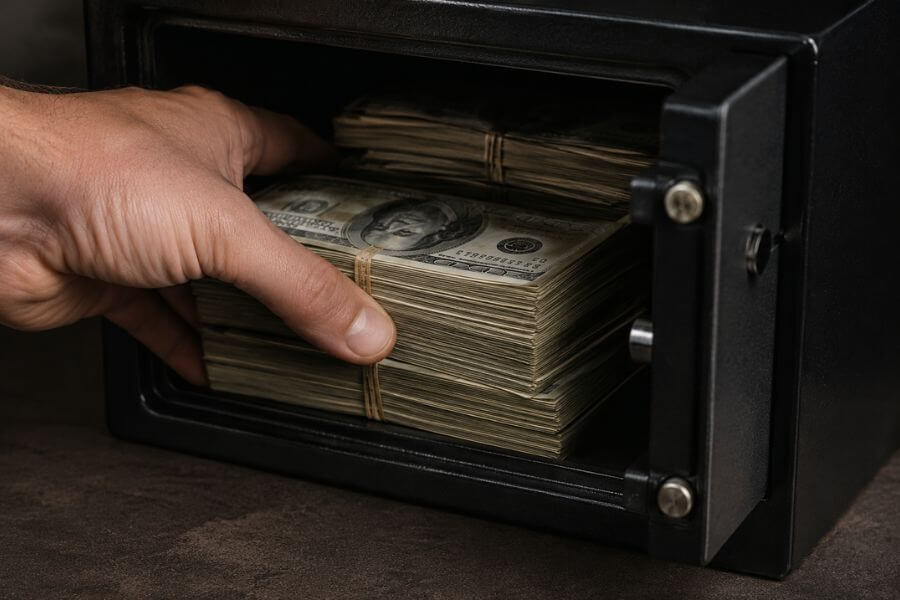
Even in a world filled with digital payments, many people still keep physical cash for emergencies, daily spending, travel, or personal savings. While cash offers convenience and privacy, it also comes with risks that many people overlook.
Unlike money stored in a bank account, stolen cash is usually impossible to recover. A single mistake can lead to a significant financial loss. Criminals, accidents, natural disasters, and even simple forgetfulness can all threaten your hard-earned money.
The good news is that most cash-related risks can be reduced or completely avoided with the right habits. In this guide, you’ll learn about the biggest security threats to your physical cash and practical ways to protect yourself.
Quick Summary Table 💰
| Threat | Risk Level | Common Cause | Prevention Method |
|---|---|---|---|
| Home Burglary | Very High | Break-ins | Use safes and secure storage |
| Pickpocketing | High | Crowded places | Use hidden wallets |
| Fire Damage | High | House fires | Fire-resistant safes |
| Flood and Water Damage | Medium | Natural disasters | Waterproof storage |
| Losing Your Wallet | High | Carelessness | Carry limited cash |
| Scams and Distractions | High | Social engineering | Stay alert in public |
| Employee Theft | Medium | Poor controls | Monitor cash handling |
| Vehicle Theft | High | Cash left in cars | Never store cash in vehicles |
| Trusted Person Misuse | Medium | Shared access | Keep cash private |
| Counterfeit Exchange Scams | Medium | Fraudulent transactions | Verify bills carefully |
How We Ranked These Security Threats 🛡️
To create this list, we evaluated each threat using several important factors:
- Frequency of occurrence
- Potential financial loss
- Difficulty of recovering stolen cash
- Impact on individuals and families
- Likelihood of prevention through simple actions
- Real-world risks faced by everyday cash holders
- Long-term consequences of the loss
- Common mistakes that increase exposure
1. Home Burglary Is the Biggest Threat to Stored Cash 🏠
Many people believe their homes are the safest place for cash. Unfortunately, burglars know exactly where most people hide money.
Common hiding places such as dresser drawers, closets, mattresses, kitchen cabinets, and shoe boxes are often searched first during a break-in. A burglar can find thousands of dollars in just a few minutes.
If you keep large amounts of cash at home, you become a more attractive target. Even if your house has good locks, a determined criminal may still find a way inside.
How to Prevent It
- Use a high-quality safe that is bolted to the floor or wall
- Avoid obvious hiding spots
- Limit the amount of cash stored at home
- Install security cameras and alarm systems
- Keep information about your cash holdings private
The fewer people who know you keep cash at home, the safer you will be.
2. Pickpocketing Can Happen in Seconds 🎒
Pickpockets are skilled thieves who rely on distraction and crowded environments. Airports, tourist attractions, concerts, public transportation, and busy shopping areas are common hunting grounds.
Most victims do not realize their cash has been stolen until much later. By then, the thief is long gone.
Modern pickpockets often work in teams. One person distracts you while another takes your wallet.
How to Prevent It
- Keep wallets in front pockets
- Use money belts when traveling
- Carry only the cash you need
- Stay aware in crowded locations
- Avoid displaying large amounts of money
Small changes in behavior can dramatically reduce your risk.
3. Fire Can Destroy Cash Permanently 🔥
Cash is highly vulnerable to fire. House fires can spread quickly and reach temperatures that completely destroy paper currency.
Many people focus on protecting electronics and valuables while forgetting that cash is one of the easiest assets to lose during a fire.
Even if some bills survive, they may become damaged beyond recognition.
How to Prevent It
- Store cash in a certified fire-resistant safe
- Keep emergency savings in a bank rather than at home
- Review your storage location regularly
- Consider multiple secure storage locations
A small investment in proper storage can save thousands of dollars.
4. Floods and Water Damage Can Ruin Hidden Cash 🌊
Water damage is another overlooked threat. Flooding, burst pipes, roof leaks, and severe storms can destroy cash stored in vulnerable locations.
People often hide money in basements, closets, and boxes that provide little protection against water.
Once bills become soaked, mold growth and deterioration can occur quickly.
How to Prevent It
- Use waterproof containers
- Choose elevated storage locations
- Keep emergency cash above flood-prone areas
- Invest in a waterproof safe
Planning for natural disasters helps protect your money when unexpected events occur.
5. Losing Your Wallet Can Be Expensive 👛
Sometimes the biggest threat is not a criminal. It is a simple human error.
A misplaced wallet can result in the loss of all the cash inside. Whether you leave it in a restaurant, on public transportation, or in a shopping cart, recovery is never guaranteed.
Cash has no built-in recovery system.
How to Prevent It
- Carry only necessary cash
- Develop a routine for checking your belongings
- Use wallets with tracking devices
- Keep emergency contact information in your wallet
- Avoid carrying large sums unless necessary
Reducing the amount of cash you carry limits your potential losses.
6. Distraction Scams Are Becoming More Common 🎭
Many criminals use distraction techniques rather than force. They create confusion to separate victims from their money.
Examples include fake spills, requests for directions, dropped items, or staged emergencies.
These scams work because people naturally want to help others.
How to Prevent It
- Stay focused when handling cash
- Be cautious around unexpected strangers
- Secure your wallet before assisting someone
- Trust your instincts if a situation feels suspicious
- Avoid counting money in public
Awareness is often your strongest defense.
7. Employee Theft Can Impact Businesses and Individuals 💼
Businesses that handle cash face additional risks. Employees may steal small amounts over time without immediate detection.
Even families can experience losses when multiple people have unrestricted access to stored cash.
Small thefts can accumulate into major losses.
How to Prevent It
- Maintain accurate cash records
- Conduct regular audits
- Limit access to cash storage
- Use surveillance systems when appropriate
- Separate cash-handling responsibilities
Accountability helps discourage theft.
8. Leaving Cash in Your Vehicle Is Extremely Risky 🚗
Many people temporarily leave cash in their car while running errands. Unfortunately, vehicles are common targets for thieves.
Even if the cash is hidden, criminals may break into the vehicle if they suspect valuables are inside.
A parked vehicle should never be considered secure storage.
How to Prevent It
- Never leave cash unattended in a vehicle
- Take cash with you whenever possible
- Avoid storing money in glove compartments
- Lock vehicles even during short stops
- Park in well-lit areas
The safest cash is cash that stays with you.
9. Trusted People Can Sometimes Become Security Risks 🤝
Most thefts are committed by strangers, but not all. Friends, family members, contractors, visitors, or roommates may gain access to your cash if storage practices are weak.
While trust is important, security should never depend entirely on trust.
Financial stress can lead some individuals to make poor decisions.
How to Prevent It
- Restrict access to cash storage locations
- Use locked containers
- Keep savings private
- Monitor stored amounts periodically
- Avoid discussing large cash reserves
Privacy is a valuable layer of protection.
10. Counterfeit Exchange and Transaction Scams Can Cost You 🎯
Whenever cash changes hands, there is a risk of receiving counterfeit bills or being shortchanged.
Fraudsters often target people selling items privately, accepting cash payments, or exchanging money with strangers.
The loss may not be discovered until much later.
How to Prevent It
- Inspect bills carefully
- Learn common security features
- Count money before completing transactions
- Meet in secure public locations
- Avoid rushed exchanges
A few extra seconds of verification can prevent costly mistakes.
Conclusion 🚨
Physical cash remains useful for emergencies, budgeting, travel, and everyday spending. However, it also comes with unique security risks that cannot be ignored.
Home burglaries, pickpocketing, fire damage, scams, vehicle theft, and simple mistakes can quickly erase years of savings. The most effective protection comes from combining good habits with secure storage methods.
By carrying only what you need, storing cash properly, maintaining privacy, and staying alert in public, you can significantly reduce your chances of becoming a victim. Protecting your cash is not about living in fear. It is about making smart decisions that keep your money safe when you need it most.
Frequently Asked Questions ❓
How much cash should you keep at home for emergencies?
Many financial experts suggest keeping enough cash to cover a few days of essential expenses. The exact amount depends on your household size, location, and emergency preparedness needs.
Is a home safe better than hiding cash around the house?
Yes. A quality safe provides far better protection than common hiding places. Burglars often know where people hide money, but a properly installed safe creates a much stronger barrier.
Can damaged cash be replaced?
In some cases, severely damaged currency may be eligible for replacement if enough of the bill remains identifiable. However, the process can be complicated and is not guaranteed.
What is the safest way to carry large amounts of cash?
Use a concealed money belt, avoid public displays of cash, stay aware of your surroundings, and travel directly to your destination whenever possible.
Should you tell family members where your emergency cash is stored?
Only trusted individuals who may need access during a genuine emergency should know the location. Limiting knowledge of your storage location reduces unnecessary risk.