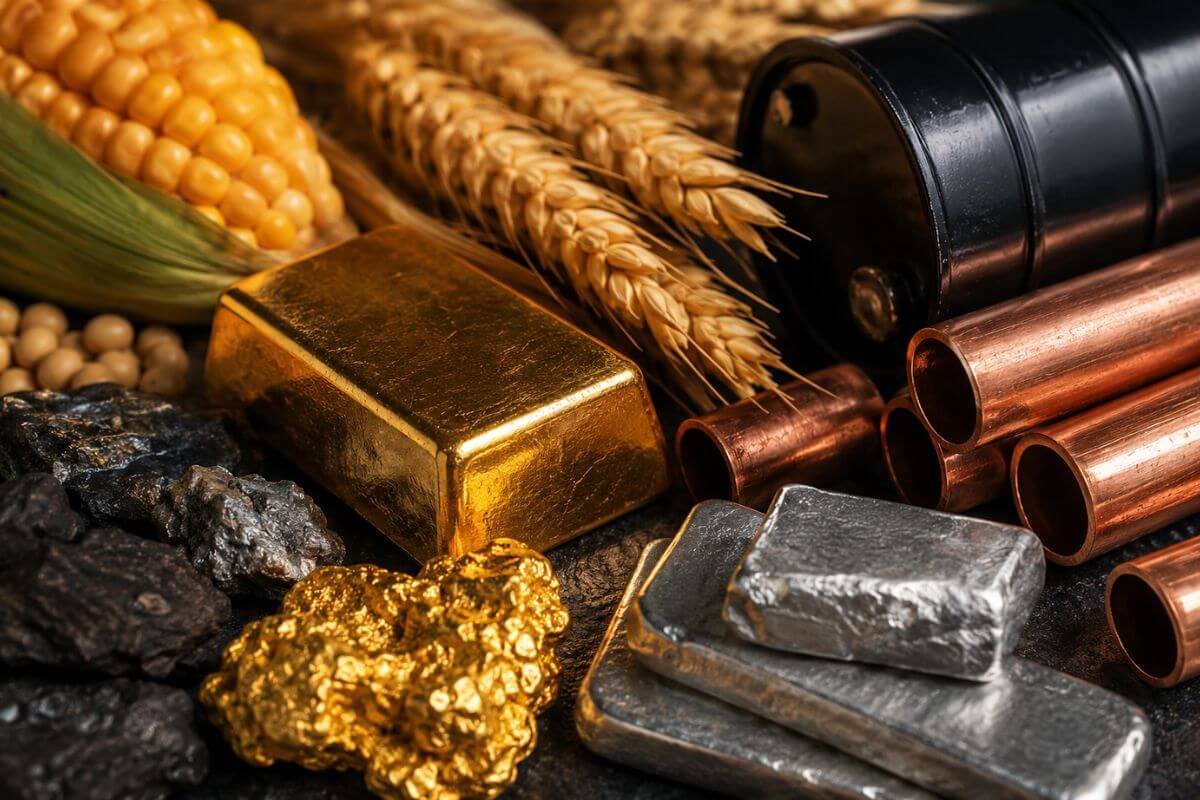
Inflation can slowly reduce the value of your money over time. When prices rise, your savings and investments may not stretch as far as they used to. That is why many investors look for assets that can hold their value during inflationary periods. Commodities are often one of the first places people turn when they want protection against rising costs.
Commodities are physical goods like gold, oil, wheat, and copper. Since these products are used in everyday life and global industries, their prices often rise along with inflation. Adding the right commodities to your portfolio can help balance risk, improve diversification, and protect your purchasing power.
In this guide, you will learn about the top 10 commodities worth adding to your portfolio as inflation hedges and why they continue to attract investors during uncertain economic times.
Quick Summary Table 📊
| Commodity | Why It Works as an Inflation Hedge | Risk Level | Best For |
|---|---|---|---|
| Gold | Stores value during uncertainty | Medium | Future-focused investors |
| Silver | Industrial and precious metal demand | Medium to High | Growth and inflation protection |
| Crude Oil | Energy prices rise with inflation | High | Aggressive investors |
| Natural Gas | Essential energy resource | High | Diversification |
| Copper | Economic growth and infrastructure demand | Medium | Industrial exposure |
| Agricultural Products | Food prices increase during inflation | Medium | Defensive investing |
| Lithium | Growing EV battery demand | High | Long-term investors |
| Uranium | Rising nuclear energy demand | High | Energy sector exposure |
| Platinum | Rare metal with industrial uses | Medium to High | Commodity diversification |
| Timber | Physical asset tied to housing and construction | Medium | Long term investors |
How We Ranked These Commodities 🧠
We ranked these commodities using several important factors that matter to everyday investors:
- Historical performance during inflationary periods
- Long-term global demand
- Supply limitations and scarcity
- Portfolio diversification benefits
- Accessibility through ETFs, stocks, or futures
- Potential for future growth
- Market stability and price volatility
- Industrial and consumer demand trends
- Ability to maintain purchasing power
- Relevance in modern economic conditions
1. Gold 🪙
Gold has been one of the most trusted inflation hedges for centuries. When inflation rises and currencies lose value, investors often move money into gold because it tends to hold its purchasing power better than cash.
One reason gold performs well during inflation is that it is limited in supply. Governments cannot simply print more gold like they can print money. This scarcity helps protect its value over time.
Gold is also viewed as a safe haven during economic uncertainty. Investors often buy gold when markets become unstable, interest rates fluctuate, or recession fears grow stronger.
You can invest in gold in several ways:
- Physical gold bars or coins
- Gold ETFs
- Gold mining stocks
- Precious metal mutual funds
Gold may not always produce huge returns quickly, but it can provide stability when inflation pressures increase.
2. Silver ⚪
Silver is often compared to gold, but it behaves a little differently. While silver is also a precious metal, it has strong industrial demand as well. It is used in electronics, solar panels, batteries, and medical products.
This combination of investment demand and industrial use gives silver strong inflation hedge potential. During inflationary periods, silver prices can rise because manufacturing costs increase and investors seek safe assets.
Silver is usually more affordable than gold, which makes it attractive for smaller investors who want precious metal exposure without spending large amounts of money.
However, silver prices can be more volatile than gold. That means you may see larger price swings in both directions. Investors who can handle short-term ups and downs may benefit from silver’s long-term growth potential.
3. Crude Oil 🛢️
Oil is one of the most important commodities in the global economy. Transportation, manufacturing, shipping, and energy production all rely heavily on crude oil.
When inflation rises, energy prices often rise too. Higher fuel costs can affect nearly every industry, which is why oil prices tend to move upward during inflationary periods.
Oil investments can provide strong returns when supply becomes limited or global demand increases. Geopolitical tensions and production cuts can also push prices higher.
You can gain exposure to oil through:
- Oil ETFs
- Energy company stocks
- Oil futures contracts
- Energy mutual funds
Oil prices can be extremely volatile, so it is important to keep your position size balanced within your portfolio.
4. Natural Gas 🔥
Natural gas has become increasingly important in global energy markets. It is used for electricity generation, heating, and industrial production across many countries.
As inflation pushes utility and energy costs higher, natural gas prices often rise alongside them. Supply disruptions, weather conditions, and export demand can also drive major price increases.
Natural gas can provide portfolio diversification because its price movements may differ from traditional stock investments. It also plays a major role in the transition toward cleaner energy compared to coal.
Still, natural gas is highly sensitive to seasonal demand and geopolitical events. Investors should expect price volatility and avoid overexposure.
5. Copper 🧲
Copper is sometimes called the metal of the future because it is essential for construction, electric vehicles, renewable energy systems, and infrastructure development.
Inflation often appears during periods of economic growth and increased industrial activity. Since copper demand rises when economies expand, its price can perform well during inflationary environments.
Copper is especially important for:
- Electrical wiring
- Solar energy systems
- Electric vehicle production
- Construction projects
- Telecommunications equipment
Many analysts believe copper demand will continue growing for years because of the worldwide push toward electrification and green energy.
Investors who want exposure to economic growth and industrial expansion may find copper to be a strong long-term inflation hedge.
6. Agricultural Products 🌾
Food prices are one of the most noticeable effects of inflation. When inflation rises, the cost of crops like wheat, corn, soybeans, coffee, and sugar often increases as well.
Agricultural commodities can help protect your portfolio because food demand remains relatively stable regardless of economic conditions. People still need to eat during recessions and inflationary periods.
Weather conditions, supply chain disruptions, export restrictions, and population growth can all influence agricultural prices.
Investing in agriculture can offer diversification benefits because crop markets may move differently from stocks and bonds.
Some common ways to invest include:
- Agricultural ETFs
- Farming companies
- Commodity futures
- Fertilizer companies
Agriculture may not always grab headlines like gold or oil, but it can play a valuable defensive role in your portfolio.
7. Lithium 🔋
Lithium has become one of the fastest-growing commodities in the world due to the rise of electric vehicles and battery technology.
Lithium is a key ingredient in rechargeable batteries used in:
- Electric cars
- Smartphones
- Energy storage systems
- Renewable energy infrastructure
As demand for clean energy grows, lithium demand continues to increase rapidly. Limited mining capacity and rising production costs can also push prices higher during inflationary periods.
Lithium investments can offer strong growth potential, but they also come with significant volatility. Prices can swing sharply depending on government policies, technological changes, and mining supply levels.
This commodity may work best for investors who want inflation protection combined with long-term growth opportunities.
8. Uranium ☢️
Uranium is gaining attention as countries search for reliable energy sources that produce fewer carbon emissions. Nuclear power is making a comeback in many parts of the world, increasing demand for uranium.
Because uranium supply is relatively limited and production takes years to expand, prices can rise quickly when demand increases.
Inflation can also push uranium prices higher because mining and production costs increase over time.
Investors interested in energy diversification may consider uranium exposure through:
- Uranium ETFs
- Nuclear energy companies
- Uranium mining stocks
Uranium is a specialized investment with higher risk, but it may offer strong upside during long-term energy transitions.
9. Platinum 💎
Platinum is another precious metal that combines investment demand with industrial use. It is used in automotive manufacturing, medical equipment, electronics, and jewelry.
Platinum can perform well during inflation because it is rare and difficult to produce. Supply shortages and rising industrial demand may support higher prices over time.
Compared to gold, platinum often receives less attention from retail investors, which can sometimes create buying opportunities.
Platinum prices can fluctuate depending on automotive demand and global manufacturing conditions. Investors looking for diversification within precious metals may find platinum appealing.
10. Timber 🌲
Timber may not be the first commodity that comes to mind, but it has become a popular inflation hedge among long-term investors.
Wood products are heavily tied to housing construction, furniture production, and infrastructure projects. As inflation increases construction costs, timber prices often rise as well.
Timber has several unique advantages:
- Trees continue growing regardless of market conditions
- Land ownership provides physical asset value
- Demand for housing supports long-term growth
- Timber can generate income through harvesting
Many investors gain timber exposure through timber REITs, forestry companies, or land ownership funds.
Timber can add stability and diversification to a portfolio while offering protection against inflation over time.
Conclusion 🚀
Inflation can create major challenges for investors, especially when traditional savings lose purchasing power. Commodities offer a practical way to protect your portfolio because many of them naturally rise in value as prices increase across the economy.
Gold and silver provide stability during uncertain times, while oil and natural gas benefit from rising energy costs. Copper, lithium, and uranium offer exposure to future industrial growth, while agriculture and timber provide defensive value tied to basic human needs.
The best approach is usually diversification. Instead of relying on a single commodity, you can spread your investments across multiple sectors to reduce risk and improve long-term stability.
By understanding how different commodities behave during inflationary periods, you can build a stronger portfolio that is better prepared for changing economic conditions.
Frequently Asked Questions ❓
Are commodities better inflation hedges than stocks?
Commodities often perform well during high inflation because their prices usually rise alongside consumer costs. Stocks can still grow during inflation, but some industries may struggle with rising expenses and lower profit margins.
How much of my portfolio should be in commodities?
Many investors keep between 5% and 15% of their portfolio in commodities. The right amount depends on your risk tolerance, investment goals, and time horizon.
Can beginners invest in commodities easily?
Yes. Most beginners use commodity ETFs or mutual funds instead of buying physical commodities or trading futures contracts directly. These options are simpler and easier to manage.
Which commodity is considered the safest inflation hedge?
Gold is generally viewed as the safest commodity inflation hedge because of its long history of maintaining value during economic uncertainty.
Are commodity investments risky?
Yes. Commodity prices can be volatile and affected by supply issues, global politics, weather, and economic conditions. Diversification and proper position sizing are important for managing risk.