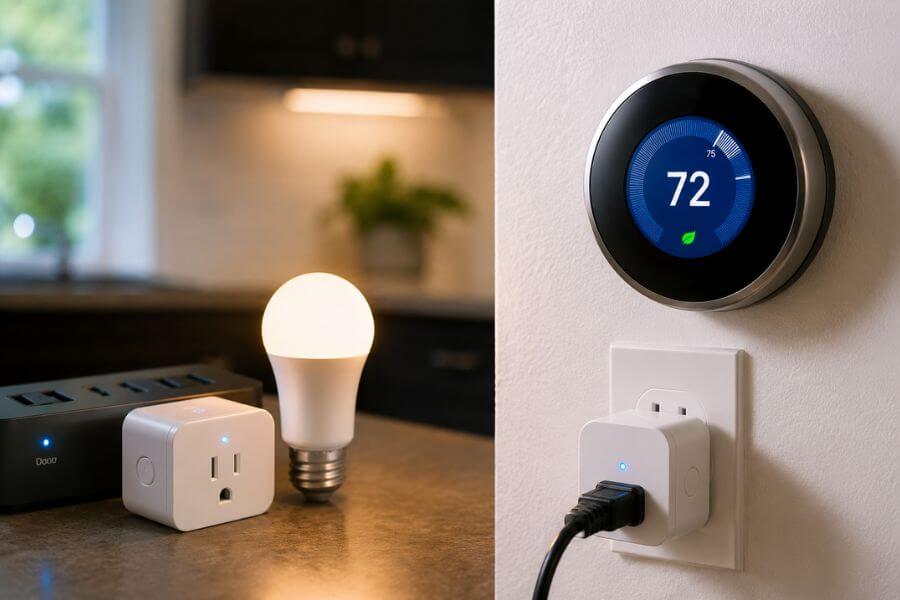
Utility bills have a way of creeping up without warning. Whether it is your electricity, heating, cooling, or water costs, small daily habits can add up to surprisingly large expenses over time. The good news is that modern smart home technology can help you cut waste without making your life less comfortable.
Many smart home gadgets work quietly in the background, adjusting temperatures, reducing unnecessary energy use, and helping you track where your money is going. Some devices can even pay for themselves through the savings they generate over the course of a year.
If you want a smarter home and lower monthly bills, these are the best smart home gadgets worth considering in 2026.
Quick Summary Table 💡
| Smart Home Gadget | Primary Savings Area | Best For |
|---|---|---|
| Smart Thermostat | Heating and cooling | Whole-home energy savings |
| Smart Plugs | Electricity | Reducing standby power |
| Smart LED Bulbs | Lighting | Lower lighting costs |
| Smart Power Strips | Electronics | Eliminating phantom energy use |
| Smart Irrigation Controller | Water | Lawn and garden savings |
| Smart Water Leak Detector | Water damage and waste | Preventing costly leaks |
| Smart Ceiling Fan Controller | Cooling | Reducing air conditioning use |
| Smart Window Shades | Heating and cooling | Better temperature control |
| Smart Energy Monitor | Electricity tracking | Identifying energy waste |
| Smart Water Heater Controller | Hot water | Lower water heating costs |
How We Ranked These Gadgets 🏡
We evaluated these smart home gadgets using several important factors:
- Potential monthly utility savings
- Ease of installation
- Long-term return on investment
- Smart automation features
- Compatibility with popular smart home systems
- Reliability and durability
- User friendliness for beginners
- Ability to reduce waste without sacrificing comfort
- Maintenance requirements
- Overall value for homeowners and renters
1. Smart Thermostat 🌡️
A smart thermostat is often the first device people buy when building a smart home, and for good reason. Heating and cooling usually account for the largest portion of household energy costs.
Unlike traditional thermostats, smart versions learn your habits and automatically adjust temperatures throughout the day. If you leave for work, the thermostat can reduce heating or cooling until you return.
Many models also use geofencing technology, which detects when you leave or arrive home using your smartphone location.
Why It Saves Money
- Reduces unnecessary heating and cooling
- Creates energy-efficient schedules automatically
- Prevents running HVAC systems when nobody is home
- Optimizes temperature settings year-round
For many households, this single upgrade can produce noticeable savings within the first year.
2. Smart Plugs 🔌
Smart plugs are small devices that plug into your wall outlets and allow you to control appliances remotely.
Many electronics continue drawing power even when they appear to be turned off. This hidden electricity use is often called standby power or phantom energy.
Smart plugs let you create schedules that automatically shut off devices when they are not needed.
Why It Saves Money
- Eliminates wasted standby electricity
- Automates power usage schedules
- Prevents forgotten devices from running all day
- Helps manage holiday lights and seasonal equipment
They are inexpensive and easy to install, making them one of the simplest ways to reduce electricity costs.
3. Smart LED Bulbs 💡
Lighting may not be the biggest part of your utility bill, but the savings can still add up over time.
Smart LED bulbs use far less electricity than older incandescent bulbs while offering automation features that reduce unnecessary usage.
You can schedule lights to turn off automatically or dim them when full brightness is not needed.
Why It Saves Money
- Uses significantly less energy than traditional bulbs
- Automatically turns lights off when not needed
- Allows customized brightness settings
- Lasts much longer than conventional bulbs
The combination of lower energy use and longer lifespan makes smart LED lighting a smart investment.
4. Smart Power Strips ⚡
Many entertainment centers and home offices contain devices that quietly consume electricity throughout the day.
Smart power strips automatically cut power to devices that are not actively being used.
For example, when you turn off your television, the strip can also disconnect connected accessories like gaming consoles and speakers.
Why It Saves Money
- Reduces phantom energy consumption
- Simplifies power management
- Works automatically after setup
- Helps lower energy use in home offices
Households with many electronic devices often see meaningful savings from this upgrade.
5. Smart Irrigation Controller 🌱
Outdoor watering can become surprisingly expensive, especially during warmer months.
A smart irrigation controller uses weather data, soil conditions, and seasonal changes to determine when your lawn actually needs water.
Instead of following a fixed schedule, it waters only when necessary.
Why It Saves Money
- Prevents overwatering
- Uses real weather forecasts
- Reduces water waste
- Supports healthier lawns and gardens
This technology is especially valuable in areas with high water rates or frequent drought conditions.
6. Smart Water Leak Detector 🚰
A small leak can waste thousands of gallons of water before you even notice it.
Smart leak detectors monitor areas around sinks, toilets, washing machines, water heaters, and pipes. If a leak is detected, you receive an instant alert on your smartphone.
Some advanced systems can even shut off the water supply automatically.
Why It Saves Money
- Prevents excessive water waste
- Reduces risk of costly repairs
- Detects leaks early
- Protects against major water damage
The savings often come from avoiding expensive emergencies rather than reducing monthly consumption alone.
7. Smart Ceiling Fan Controller 🌬️
Ceiling fans use much less electricity than air conditioning systems.
A smart fan controller helps you maximize airflow by adjusting fan speed automatically based on room temperature or schedules.
When used properly, ceiling fans can make rooms feel cooler without lowering the thermostat.
Why It Saves Money
- Reduces air conditioning demand
- Optimizes fan operation
- Improves indoor comfort
- Uses less energy than cooling systems
Many homeowners overlook this simple upgrade despite its strong energy-saving potential.
8. Smart Window Shades 🪟
Windows play a major role in indoor temperature control.
Smart shades automatically open and close based on sunlight, temperature, and time of day. During hot afternoons, they can block heat from entering your home. During colder months, they can help retain warmth.
Why It Saves Money
- Reduces solar heat gain
- Improves insulation efficiency
- Lessens HVAC workload
- Creates automated energy management
This technology works particularly well in homes with large windows or strong sun exposure.
9. Smart Energy Monitor 📊
You cannot reduce waste if you do not know where it is happening.
Smart energy monitors track household electricity usage in real time. Many systems break down consumption by appliance or room, helping you identify hidden energy drains.
Why It Saves Money
- Reveals inefficient appliances
- Tracks daily energy patterns
- Encourages smarter habits
- Helps prioritize future upgrades
The insights gained often lead to savings far beyond the device itself.
10. Smart Water Heater Controller 🔥
Water heating is one of the largest energy expenses in most homes.
A smart water heater controller allows you to schedule heating cycles based on when hot water is actually needed.
Instead of heating water constantly throughout the day, the system operates more efficiently.
Why It Saves Money
- Reduces unnecessary heating cycles
- Optimizes hot water availability
- Improves energy efficiency
- Works well for families with predictable schedules
This gadget can significantly lower energy consumption while maintaining comfort.
Conclusion 🎯
Smart home technology is no longer just about convenience. Many devices now provide real financial benefits by reducing waste and improving efficiency. The best part is that most of these gadgets work quietly in the background, requiring little effort after setup.
If you are looking for the biggest impact, start with a smart thermostat, smart plugs, and an energy monitor. Once those are in place, you can expand your smart home with water-saving and climate-control devices that continue lowering your monthly bills year after year.
A smarter home is not only more comfortable but also more affordable to operate.
Frequently Asked Questions ❓
Which smart home gadget saves the most money?
For most households, a smart thermostat delivers the largest savings because heating and cooling represent a major portion of utility costs. The exact savings depend on climate, home size, and energy habits.
Are smart home gadgets difficult to install?
Many smart devices are designed for beginners. Smart plugs, smart bulbs, and leak detectors usually take only a few minutes to install. Some devices, such as thermostats, may require basic wiring knowledge.
Can renters use smart home gadgets?
Yes. Smart plugs, smart bulbs, energy monitors, leak detectors, and some smart shades are renter-friendly options that typically do not require permanent modifications.
How long does it take for smart gadgets to pay for themselves?
The timeline varies by device and utility rates. Some gadgets recover their cost within months, while others may take one to three years through ongoing utility savings.
Do smart home gadgets work without a smart speaker?
Yes. Most smart home devices can be controlled through mobile apps. Smart speakers simply add voice control and additional automation options.