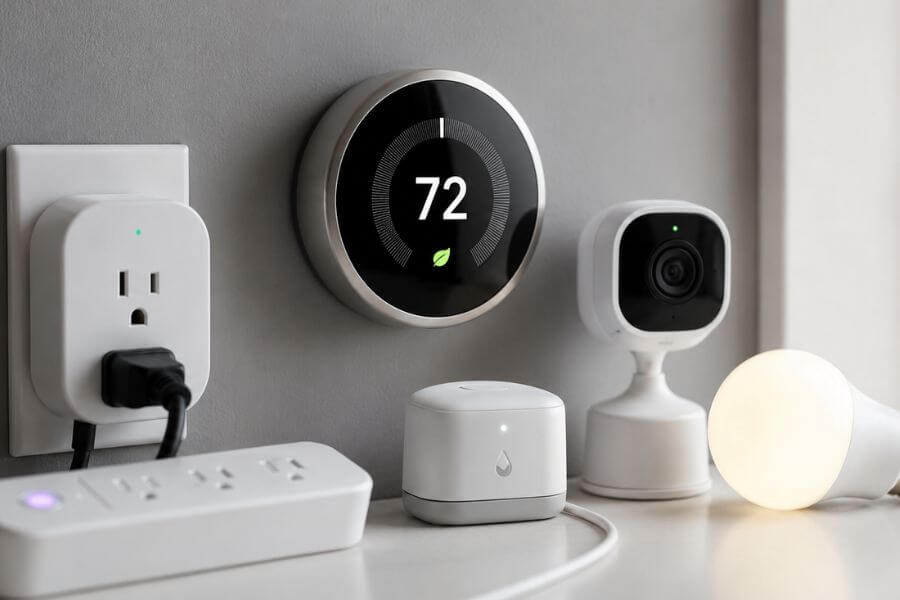
Utility bills seem to rise every year, making it harder to keep monthly expenses under control. The good news is that smart home technology can help you reduce energy and water consumption without sacrificing comfort. Many modern devices automatically adjust how your home uses electricity, heating, cooling, and water, helping you avoid waste while maintaining convenience.
Whether you own a home or rent an apartment, investing in the right smart devices can lead to noticeable savings over time. From intelligent thermostats to leak detectors and smart plugs, these products help you take control of your household utility costs.
In this guide, you’ll discover the best smart home devices that can help lower your utility bills while making your home more efficient and comfortable.
Quick Summary Table
| Smart Home Device | Primary Utility Savings | Best For |
|---|---|---|
| Smart Thermostat | Heating and cooling | Whole-home energy savings |
| Smart Plugs | Electricity | Managing appliances |
| Smart LED Bulbs | Electricity | Lighting efficiency |
| Smart Power Strips | Electricity | Eliminating standby power |
| Smart Water Leak Detectors | Water | Preventing costly leaks |
| Smart Irrigation Controllers | Water | Outdoor water savings |
| Smart Ceiling Fan Controllers | Electricity | Improving HVAC efficiency |
| Smart Window Shades | Heating and cooling | Temperature regulation |
| Smart Energy Monitors | Electricity | Tracking energy usage |
| Smart Water Heaters | Water and energy | Efficient hot water management |
| Smart Vent Systems | Heating and cooling | Room-by-room climate control |
How We Ranked These
When evaluating smart home devices for reducing utility costs, we focused on several important factors:
- Potential monthly and annual savings
- Ease of installation and setup
- Long-term return on investment
- Automation capabilities
- Compatibility with smart home ecosystems
- Reliability and durability
- User-friendly mobile apps
- Energy and water conservation benefits
- Ability to reduce waste automatically
- Overall value for homeowners and renters
1. Smart Thermostat
A smart thermostat is often the most effective smart home upgrade for lowering utility bills. Heating and cooling account for a large portion of household energy use, making thermostat optimization one of the quickest ways to save money.
Unlike traditional thermostats, smart models learn your routines and automatically adjust temperatures throughout the day. They can lower heating or cooling when you’re away and return your home to a comfortable temperature before you arrive.
Many smart thermostats also provide energy reports that help you identify wasteful habits and optimize settings for greater efficiency.
Why it helps:
- Reduces unnecessary heating and cooling
- Creates automated schedules
- Learns your daily routine
- Allows remote control through a smartphone
- Improves overall HVAC efficiency
2. Smart Plugs
Smart plugs offer a simple and affordable way to reduce electricity waste. Many devices continue drawing power even when they’re turned off, a phenomenon often called phantom energy usage.
By connecting appliances to smart plugs, you can schedule operating hours, automatically shut off unused electronics, and monitor power consumption.
Smart plugs work particularly well with televisions, gaming systems, coffee makers, and home office equipment.
Why it helps:
- Eliminates unnecessary power usage
- Automates appliance schedules
- Tracks energy consumption
- Easy to install without professional help
3. Smart LED Bulbs
Lighting can represent a significant portion of your electricity bill, especially in larger homes. Smart LED bulbs consume far less energy than traditional incandescent bulbs while providing advanced controls.
You can schedule lights, dim brightness levels, and remotely turn off lights that were accidentally left on.
Many smart bulbs also last significantly longer than conventional alternatives, reducing replacement costs over time.
Why it helps:
- Uses less electricity
- Extends bulb lifespan
- Allows automated schedules
- Prevents lights from staying on unnecessarily
4. Smart Power Strips
While smart plugs control individual devices, smart power strips manage multiple electronics simultaneously.
Entertainment centers, gaming setups, and home offices often contain several devices that consume standby power. Smart power strips automatically cut power to devices when they’re not being used.
This small change can add up to meaningful savings throughout the year.
Why it helps:
- Reduces phantom energy consumption
- Controls multiple devices at once
- Automates shutdown schedules
- Ideal for media centers and workstations
5. Smart Water Leak Detectors
Water leaks can silently increase utility bills for weeks or even months before being discovered. Smart water leak detectors help prevent this problem by alerting you immediately when moisture is detected.
Some advanced models can even shut off your home’s water supply automatically when a leak is found.
The savings can be substantial, especially when preventing major plumbing damage and excessive water waste.
Why it helps:
- Detects leaks early
- Prevents water waste
- Reduces repair expenses
- Provides real-time notifications
6. Smart Irrigation Controllers
Outdoor watering is one of the largest sources of water consumption for many households. Traditional sprinkler systems often waste water due to fixed schedules that ignore weather conditions.
Smart irrigation controllers adjust watering schedules based on local forecasts, rainfall, humidity, and soil conditions.
This ensures your lawn and landscaping receive only the water they actually need.
Why it helps:
- Prevents overwatering
- Adjusts to weather conditions
- Conserves water automatically
- Supports healthier landscaping
7. Smart Ceiling Fan Controllers
Ceiling fans use far less energy than air conditioners. Smart fan controllers help maximize this advantage by automating fan operation based on room temperature and occupancy.
When used alongside a smart thermostat, ceiling fans can reduce the workload placed on your HVAC system.
The result is greater comfort and lower cooling costs during warmer months.
Why it helps:
- Supports efficient cooling
- Reduces air conditioner usage
- Automates fan schedules
- Improves airflow throughout the home
8. Smart Window Shades
Windows can significantly affect indoor temperatures. During summer, sunlight entering through windows increases cooling demands. During winter, poorly managed windows can contribute to heat loss.
Smart window shades automatically open and close based on sunlight, time of day, or room temperature.
This passive temperature management helps reduce HVAC usage year-round.
Why it helps:
- Blocks excess solar heat
- Helps retain indoor temperatures
- Reduces HVAC workload
- Operates automatically
9. Smart Energy Monitors
Many homeowners don’t know which appliances consume the most electricity. Smart energy monitors provide detailed insights into household energy usage.
By identifying high-consumption devices, you can make smarter decisions about appliance usage and upgrades.
These monitors often reveal unexpected sources of energy waste that would otherwise go unnoticed.
Why it helps:
- Tracks real-time electricity use
- Identifies energy-hungry appliances
- Helps improve efficiency habits
- Supports informed decision-making
10. Smart Water Heaters
Water heating is one of the largest utility expenses in many homes. Smart water heaters improve efficiency by learning usage patterns and heating water only when needed.
Some models allow remote control through mobile apps, making it easier to adjust settings and reduce waste.
Advanced scheduling features help prevent unnecessary energy consumption during periods of low demand.
Why it helps:
- Optimizes water heating schedules
- Reduces standby energy use
- Provides usage insights
- Improves hot water efficiency
11. Smart Vent Systems
Traditional HVAC systems often heat or cool rooms that aren’t being used. Smart vent systems solve this problem by directing airflow where it’s needed most.
These systems work with smart thermostats to create customized temperature zones throughout the home.
By reducing energy use in empty rooms, smart vents help improve comfort while lowering utility expenses.
Why it helps:
- Creates room-specific climate zones
- Improves HVAC efficiency
- Reduces energy waste
- Enhances comfort throughout the home
Conclusion
Smart home technology is no longer just about convenience. Many devices now provide measurable savings by reducing electricity, heating, cooling, and water consumption. While each device offers benefits on its own, combining several smart solutions can significantly lower your monthly utility bills.
For most homeowners, a smart thermostat delivers the fastest return on investment. However, adding smart plugs, leak detectors, energy monitors, and water-saving devices can further improve efficiency and maximize savings over time.
The key is choosing devices that target your household’s biggest sources of utility expenses. With the right setup, you can enjoy a more comfortable home while keeping more money in your pocket every month.
Frequently Asked Questions
How much can smart home devices reduce utility bills?
Savings vary depending on your home size, local utility rates, and usage habits. Many homeowners see reductions ranging from 10% to 30% when combining multiple energy-saving smart devices.
Do smart home devices require professional installation?
Many devices, such as smart plugs, smart bulbs, and leak detectors, are designed for simple do-it-yourself installation. Others, such as smart thermostats and smart water heaters, may benefit from professional installation depending on your home’s wiring and plumbing systems.
Are smart home devices worth the upfront cost?
In many cases, yes. Devices that reduce heating, cooling, and water waste often pay for themselves through lower utility bills over time. The exact return depends on energy prices and household usage patterns.
Can renters use smart home devices to save money?
Absolutely. Renters can easily use portable options such as smart plugs, smart bulbs, smart power strips, and energy monitors without making permanent changes to the property.
Do smart home devices work during internet outages?
Most devices retain basic functionality during temporary internet disruptions. However, advanced remote controls, automation features, and cloud-based services may be limited until the connection is restored.