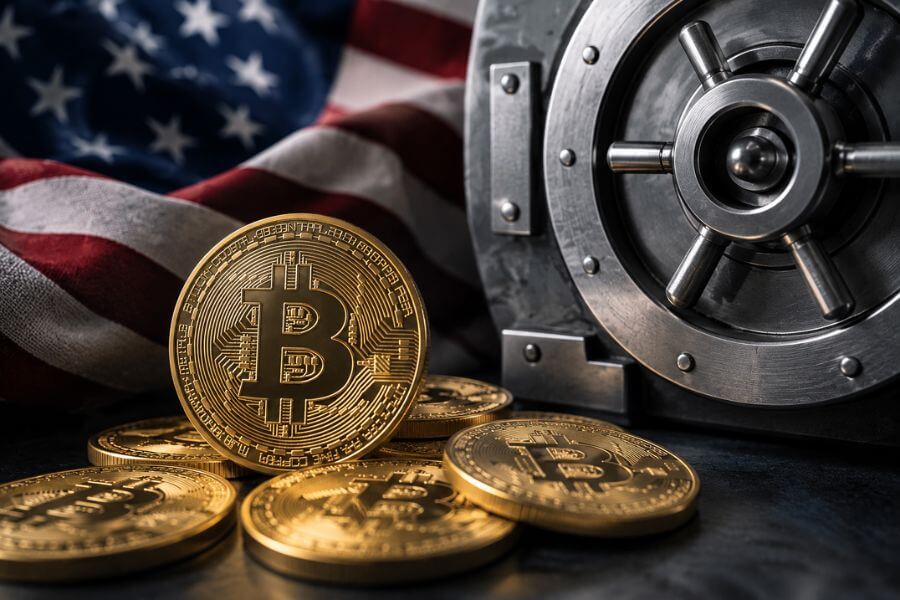
Imagine opening your investment account and seeing that the biggest economic power on earth is now your partner in holding cryptocurrency. This is no longer a wild dream for tech fans. It is happening right now. The federal government has officially stepped into the digital asset world by building a permanent savings account for cryptocurrency. This move changes how everyday people must look at money, savings, and the future of their wealth. If you own digital coins, stocks, or even just keep your cash in a local bank, this new policy impacts your wallet. Understanding this change is the best way to protect and grow your hard-earned money.
Key Takeaways for Your Portfolio
- The Government Is Stacking Digital Coins: The federal government is keeping the cryptocurrency it gets from legal cases instead of selling it, creating a permanent national savings fund.
- A Shift in Global Finance: By treating digital assets like gold, the country is signaling to the world that cryptocurrency has a real, lasting value.
- Prices Could Face a New Floor: When a major government decides to never sell its massive supply of digital coins, it removes a lot of selling pressure from the open market.
- The Rise of Institutional Rules: New laws and guidelines are making the crypto space much safer and more predictable for regular people who want to buy in.
- Inflation Insurance Re-imagined: Investors are starting to use digital assets alongside gold to protect their wealth from the shrinking purchasing power of paper money.
What Is the Strategic Bitcoin Reserve?
To understand what is happening to your money, you first need to know what this new government fund actually is. A strategic reserve is simply a giant safety stockpile of important assets kept by a country. For many decades, the nation has kept millions of barrels of oil hidden away in underground tanks to use if there is ever a massive fuel shortage. The government also keeps massive stacks of gold bars locked up in tight vaults to back up the financial system during major global crises.
Now, the government has created a brand-new type of safety net. This new stockpile holds digital assets. Instead of holding physical items like oil or gold, this fund holds digital code on a decentralized network. The main goal of this fund is to give the country a brand-new financial layer that cannot be ruined by traditional banking issues or inflation. It is a historic pivot because it means the highest financial offices in the land now view cryptocurrency as a permanent tool for national wealth.
The fund did not require the government to spend billions of new taxpayer dollars to get started. Instead, the government used assets it already had in its possession. For many years, law-enforcement agencies have been seizing large amounts of cryptocurrency from online criminals, scammers, and illegal digital marketplaces. In the past, the government would turn around and sell these coins at public auctions to get fast cash. Under the new rules, the government has stopped those sales completely. All those seized coins are now moved into a permanent vault that the government promises to hold for the long term.
The Journey to a National Digital Vault
This major shift did not happen overnight. It is the result of years of intense debates, changing political views, and new laws rolling through Washington. The story took a massive leap forward when an executive order officially created the framework for this digital savings fund. This order changed the rulebook by commanding federal agencies to stop treating seized cryptocurrency like junk property that needs to be sold off quickly. It forced them to treat it like a valuable piece of the national balance sheet.
Shortly after that order, lawmakers in Congress took things a step further. They introduced a brand-new piece of legislation known as the American Reserve Modernization Act. This law aims to turn the temporary executive order into a permanent rule that no future leader can easily erase. The plan laid out in this act is bold. It sets a goal for the national treasury to acquire up to one million digital coins over a five-year period. This would be done through careful, budget-neutral methods that do not add any extra burdens to everyday taxpayers.
At the exact same time, the government made another huge decision by placing a temporary ban on central bank digital currencies. This ban means the government cannot create a government-run, trackable digital dollar anytime soon. By shutting the door on a government-made coin while simultaneously hoarding the original decentralized coin, the state made its preference very clear. It decided to trust a public, open network rather than building a state-controlled digital tracking system.
Why the Government Is Hoarding Crypto Now
You might wonder why a superpower with the strongest paper currency in the world would want to hoard digital coins. The answer comes down to numbers and basic math. The national debt has passed thirty-nine trillion dollars, and it continues to grow every single minute. When a country has that much debt, the value of its paper currency naturally drops over time because more money has to be printed to pay the bills. This constant printing causes the prices of your groceries, gas, and housing to go up.
A digital asset like the one the government is hoarding has a hard mathematical rule built into its code. There can only ever be twenty-one million of these coins created in the entire history of the world. No president, congress, or central bank can ever press a button and print more of them. This strict limit makes it the exact opposite of paper money. The government realizes that holding an asset that is completely scarce can help balance out a balance sheet that is weighed down by endless paper debt.
There is also a massive game of international competition happening behind the scenes. The United States is not the only country that holds a lot of cryptocurrency. Other large nations have also ended up with massive digital stashes through their own law-enforcement actions or state-backed mining programs. In a world where financial power can shift quickly, being the first major nation to declare a permanent digital currency fund gives the country a huge head start. It ensures that if the rest of the world starts using digital assets to trade or back up their own money, the domestic economy will already hold the biggest piece of the pie.
How This Impacts Everyday Investors
Now that the government is officially a long-term holder of digital assets, the game has completely changed for you as an investor. In the past, cryptocurrency was viewed by many as a dangerous, speculative hobby for computer geeks and risky gamblers. Regular people stayed away because they were afraid the government might ban it or that the value would drop to zero overnight. Now that the treasury is building its own vault, that fear of a total shutdown is gone. You can now invest with the confidence that this asset class is a recognized part of the financial system.
This new reality creates a psychological safety net for the market. When you know that the largest financial entity on earth is actively keeping hundreds of thousands of coins off the market, it changes how low the price can realistically drop during a market crash. The government has become the ultimate long-term investor who refuses to panic-sell. This steady behavior gives regular people, financial advisors, and retirement funds the green light to view digital assets as a legitimate place to store wealth for decades.
It also changes how you need to think about building a balanced investment portfolio. For a long time, standard financial advice told people to put sixty percent of their money into stocks and forty percent into bonds. That old mix is struggling because bonds often do not pay enough to beat the rising cost of living. Investors are now using small pieces of their savings to buy digital assets as an alternative form of financial protection. Even adding a very small amount to a regular portfolio can completely change your long-term growth trends because these digital assets grow at a very different pace compared to traditional corporate stocks.
The Financial Playing Field Before and After 2026
To truly see how much things have changed, it helps to look at the financial world before these government rules were put in place versus what you are experiencing today. The differences touch everything from how safe your funds are to who is allowed to buy into the market.
| Financial Feature | Before the Government Reserve Policy | Current Reality and Moving Forward |
| Government Action | Seized coins were sold in massive auctions, causing sudden market crashes. | Seized coins are locked away permanently, providing market stability. |
| Market Safety | Unregulated exchanges could fail easily, leaving users with nothing. | Clear regulatory rules protect everyday investors and their accounts. |
| Big Bank Involvement | Wall Street banks avoided the asset class due to legal fears. | Massive pension funds and traditional banks offer digital asset options. |
| Role in a Portfolio | Viewed as a high-risk gamble for quick, short-term profits. | Used as a long-term savings tool to beat national inflation. |
| Legal Protections | Users worried about sudden government bans or heavy crackdowns. | Laws protect your explicit right to hold and control your own coins. |
This clear shift shows that the market has grown up. You are no longer navigating a wild digital frontier alone. You are participating in a structured financial system that has the full attention and cooperation of federal lawmakers.
Understanding the New Market Protections
One of the biggest wins for you as a regular investor is the wave of new safety rules that came along with the national reserve policy. In the early days of crypto, using digital assets was confusing and dangerous. People had to trust shady websites based in faraway countries just to buy a fraction of a coin. If those websites disappeared or got hacked, savers lost everything with no way to get their money back.
The new legal framework completely fixes this problem by introducing strict rules for companies that hold digital assets for the public. These rules make sure that any company offering cryptocurrency services must follow the same tough safety standards as a traditional local bank. They must undergo regular independent audits to prove they actually hold the coins they claim to have. They are also required to keep user funds completely separate from their own business money so that your savings can never be used to pay off a company’s bad debts.
Furthermore, new laws have explicitly protected your personal right to self-custody. This means the government cannot pass laws that stop you from moving your digital coins into a private wallet that you control completely. Having this legal guarantee is a massive deal for your personal freedom. It means you can always choose to be your own bank, keeping your wealth safely in your own hands without needing to ask a large financial institution for permission to use your own money.
Gold Versus Bitcoin in the Modern Era
For thousands of years, gold has been the king of safety. When wars break out, when governments fail, or when paper money becomes worthless, people always run to gold because it is shiny, heavy, and hard to find. However, the world is now fully digital, and a new generation of savers is looking for a modern alternative to heavy yellow metal. The creation of a national digital currency reserve proves that the government now views cryptocurrency as a direct digital equivalent to physical gold.
Both assets share the exact same core benefit. They are incredibly rare, and they cannot be created out of thin air by a central bank. But when you look closely at how they work in everyday life, the digital version has several massive advantages for a modern investor.
Portability and Storage
If you own ten thousand dollars worth of physical gold, it is heavy and hard to carry around. If you need to move across the country or flee an emergency, carrying heavy metal bars is dangerous and inconvenient. Storing it safely requires buying an expensive metal safe or paying a bank to keep it in a secure deposit box. A digital asset, on the other hand, weighs absolutely nothing. You can hold millions of dollars worth of value on a tiny digital device that fits right inside your pocket, or you can access it anywhere in the world simply by remembering a secret pass-phrase.
Dividing Wealth into Tiny Pieces
Have you ever tried to buy a single loaf of bread or a grocery order with a bar of gold? It is practically impossible because you cannot easily slice a gold bar into tiny fractions while standing at a store checkout counter. Digital assets solve this problem completely. Each individual digital coin can be broken down into one hundred million tiny individual pieces. This means you can use the exact same asset to buy a multimillion-dollar house or a simple piece of fruit. This extreme flexibility makes it a much more useful form of money for a fast-moving, digital society.
Instant Global Verification
When someone hands you a piece of gold metal, you cannot tell if it is pure gold or just fake painted lead without using special chemicals or heavy testing machines. This makes trading physical gold with other individuals slow and full of trust issues. With a decentralized digital network, the entire system is constantly checked and verified by thousands of computers all over the planet. When a transaction happens, the network instantly proves that the coins are one hundred percent real and that they belong to you. This verification happens in minutes, allowing you to send wealth across the globe with zero trusted middlemen.
Risks and Challenges to Keep in Mind
While this new government policy is incredibly exciting for the crypto world, it would be a huge mistake to think that all the risks have magically vanished. Investing always comes with trade-offs, and you need to keep a clear, realistic view of the challenges that still exist in this space.
The first major risk you must prepare for is extreme price volatility. Even though the government is holding a massive stash of coins permanently, the price of digital assets can still swing up and down violently in a short amount of time. It is not uncommon for the market to drop twenty or thirty percent in a single week due to bad global news, high interest rates, or general economic panic. If you are someone who panics easily when seeing your account balance drop, these wild rides can cause you to make bad choices and sell at a loss.
Another big challenge is the unpredictable nature of political power. The current administration has embraced digital assets completely, but politics can change fast. If a new group of leaders takes control of Washington in a few years, they might decide they do not like cryptocurrency. While it would be very difficult for them to dismantle a legal reserve completely, they could try to pass heavy taxes or annoying rules that make it harder for regular people to use their coins. You must always remember that government support can shift depending on who is sitting in the big offices.
Finally, you have to watch out for technical and security risks. Even though the network itself is incredibly secure and has never been hacked, the personal tools you use can be vulnerable. Scammers are becoming smarter every day, using tricky emails, fake websites, and malicious software to steal secret pass-phrases from unsuspecting investors. If you do not take the time to learn how to secure your accounts, use strong security keys, and double-check every digital move you make, you could lose your savings with no bank customer service line to call for help.
How Large Banks Are Reshaping the Market
For a long time, the biggest banks on Wall Street were the loudest critics of digital assets. They called it a passing fad and warned their clients to stay away. But now that the federal government has validated the asset class by creating its own reserve, those exact same big banks are racing to build their own cryptocurrency tools. They realized that if they do not offer these services, their wealthiest clients will take their money somewhere else.
This corporate race has led to the creation of simple, highly regulated investment funds that allow anyone to buy into digital assets through their normal brokerage accounts. You no longer need to figure out how to navigate complex digital exchanges or manage secret keys if you do not want to. You can simply buy shares of a digital asset fund just as easily as buying shares of a massive technology company. This accessibility has opened the floodgates for trillions of dollars of institutional money to slowly enter the market.
Massive pension funds that manage the retirement money for teachers, police officers, and local government workers are also starting to buy in. These funds are famous for being incredibly cautious with their cash. The fact that they are now allocating a small percentage of their wealth to digital assets shows a complete shift in mainstream financial thinking. As these massive funds continue to buy small pieces of the supply month after month, they create a constant stream of demand that helps stabilize the entire ecosystem for the long haul.
Creating a Long-Term Investment Strategy
Knowing all this information is only useful if you use it to build a smart, personalized plan for your own money. You do not need to be a financial genius to win in this new economic environment, but you do need to be disciplined, patient, and consistent.
The smartest strategy for most regular people is an approach called dollar-cost averaging. Instead of taking a giant lump sum of cash and trying to guess the perfect time to buy in, you commit to buying a very small, fixed amount on a regular schedule, such as every single week or once a month. When the market prices are high, your fixed amount buys a smaller piece of a coin. When prices crash, your fixed amount automatically buys a much larger piece. Over time, this method smooths out the wild price swings and removes all the stressful emotional guesswork from your investing life.
It is also vital to practice proper diversification. No matter how much the government supports digital assets, you should never put all your eggs into one single basket. A healthy financial life requires balance. You should still maintain a steady emergency savings fund in cash to cover your regular living expenses, and you should continue to hold a mix of traditional investments like stocks or real estate. Think of digital assets as a powerful spice for your financial meal. A little bit can make the whole portfolio much stronger, but putting too much in can ruin the balance and expose you to unnecessary stress.
Lastly, you must adopt a truly long-term mindset. The national reserve policy is built around a timeline of twenty years, not twenty days. If you buy digital assets hoping to get rich quick by next month, you are setting yourself up for disappointment and stress. The real wealth in this space belongs to the people who buy with the intention of holding their assets for five, ten, or twenty years, allowing the growing global demand and the fixed supply to do the heavy lifting for them over time.
Frequently Asked Questions
What will happen if the government decides to change its mind and sell the reserve?
If a future administration changes the rules and decides to dump the national stockpile onto the open market, it would likely cause a sudden and sharp drop in the price of digital assets. However, the current laws being developed are specifically designed to prevent this by locking the coins away for a minimum of twenty years. Selling them would require passing new legislation through Congress, which is a slow and difficult process.
Do I have to pay special taxes now that the government has a digital reserve?
The creation of the reserve does not change the basic tax rules for your personal account. In the United States, digital assets are treated like property by the tax authorities. This means you only owe taxes when you sell your coins for a profit or use them to make a purchase. If you simply buy your coins and hold them in your wallet without selling, you do not owe any taxes on those gains.
Can the government take away my personal digital coins to grow its own vault?
No, the laws explicitly protect your right to own and control your own digital assets. The national fund is strictly built using coins that were already forfeited by criminals or through voluntary, budget-neutral market strategies. The government has no legal right to seize assets from law-abiding citizens who are practicing safe self-custody.
Is it too late for a regular person to start buying digital assets in 2026?
It is definitely not too late. While the prices are much higher than they were a few years ago, we are still in the very early stages of global adoption. Now that major governments and massive pension funds are just starting to build their permanent stashes, the foundation is being laid for the next decade of steady growth.
How do I store my own digital assets safely so I do not get hacked?
The safest way to store your coins is by using a hardware wallet, which is a small physical device that keeps your private keys completely disconnected from the internet. This prevents online hackers from accessing your funds. You must also write down your secret backup words on a physical piece of paper, hide that paper in a secure spot, and never share those words with anyone online for any reason.