Key Takeaways
- Real World Asset (RWA) tokenization turns physical items like buildings, art, and gold into digital tokens on a blockchain network.
- It splits big, expensive things into small pieces so that almost anyone can buy a tiny fraction of them.
- This technology removes slow middlemen, lowers high costs, and lets people trade assets twenty-four hours a day, seven days a week.
- By bringing massive traditional markets online, it makes investing more open, safe, and transparent for everyday people.
Welcome to the Future of Money
Imagine owning a piece of a famous painting, a corner of a luxury hotel in New York, or a tiny sliver of a gold bar. In the past, you needed millions of dollars in your bank account to buy things like that. Normal people could only watch from the sidelines. But a massive shift is happening right now in the financial world. It is called Real World Asset tokenization, or RWA tokenization for short. This technology uses the power of blockchain to change how we own, buy, and sell everyday things. It bridges the gap between old-school finance and the digital age. It is completely reshaping the global economy, and it is doing it right under our noses.
Traditional finance often feels like an exclusive club with a massive velvet rope at the door. If you do not have enough cash, you cannot get in. Tokenization tears that rope down. It takes valuable items from the physical world and transforms them into digital tokens that live on a secure computer network. This means the rules of investing are shifting fast. You no longer need to be a wealthy tycoon to build a diverse collection of investments. The tools are changing, the platforms are growing, and the entire system is becoming more available to everyone. Let us dive deep into how this works and why it matters to you.
What Are Real World Assets anyway
To understand this big shift, we first need to look at what we are actually turning into tokens. Real World Assets are simply things that exist in physical form or in traditional legal systems. They have real value that people agree on. Think about the house you live in, the cash in your wallet, or the bonds issued by governments. These are all tangible or legally recognized assets. They form the backbone of the entire global economy.
For a long time, these assets have stayed locked inside old, slow systems. If you want to sell a building, you have to deal with mountains of paperwork, lawyers, banks, and agents. It can take months just to finish one deal. The same goes for buying precious metals or investing in large collections of corporate debt. These assets are stable and valuable, but they are also heavy, slow to move, and hidden behind complicated rules.
When we talk about these assets in the context of modern technology, we are looking at a massive vault of wealth. There are hundreds of trillions of dollars tied up in global real estate, gold, commodities, and public infrastructure. The goal of modern financial builders is to take all that locked wealth and give it digital wings. By doing this, we can make these heavy, slow-moving items as easy to trade as a text message.
The Secret Sauce Behind Tokenization
The engine that makes all of this possible is a piece of technology called blockchain. You might have heard about blockchain because of digital currencies, but its true power goes far beyond that. At its core, a blockchain is just a shared digital ledger. It is a notebook that lives on thousands of computers at the same time. Because everyone has the exact same copy of the notebook, no single person can cheat, erase records, or change the history of who owns what.
On this digital ledger, we can create something called a smart contract. Think of a smart contract as a digital vending machine. In a normal vending machine, you put in your money, press a button, and the machine automatically drops your snack. You do not need a shopkeeper to stand there and hand it to you. A smart contract does the exact same thing but with digital rules. If you send the right amount of digital funds to the contract, it automatically transfers the ownership token to your digital wallet.
This digital setup creates an unbreakable chain of trust. When an asset is placed onto the blockchain, it receives a digital twin. This twin is the token. The token proves without a single doubt that you own a specific piece of that underlying asset. Because the blockchain runs day and night without stopping, these tokens can be checked, moved, and saved with complete safety. No one can forge a token, and no one can pretend they own something they do not.
Digital Assets versus Traditional Assets
| Feature | Traditional Assets | Tokenized Assets |
| Trading Hours | Monday to Friday, 9 AM to 4 PM | 24 Hours a day, 7 days a week, 365 days a year |
| Settlement Time | Days or weeks of paperwork | Almost instant digital confirmation |
| Minimum Investment | Very high, often thousands or millions | Very low, sometimes just a few dollars |
| Middlemen Involved | Lawyers, brokers, banks, clearing houses | Automated smart contracts and blockchain nodes |
| Transparency | Hidden behind closed bank doors | Publicly verifiable on an open digital ledger |
How the Process Works Step by Step
Turning a giant physical object into tiny digital tokens might sound like magic, but it follows a very strict, logical path. It requires cooperation between the physical world, legal systems, and digital networks. Let us walk through how an asset goes from a physical object to a collection of tokens in a digital wallet.
Step One Finding and Valuing the Asset
The very first phase is all about selecting the object and figuring out exactly what it is worth. Let us say a company owns a beautiful apartment building worth ten million dollars. Before anything can happen on a computer, independent appraisers must look at the building. They check its condition, its location, and its market value. Legal experts also step in to make sure the building does not have unpaid debts or messy lawsuits attached to it. Once the true value is locked in and verified, the asset is ready for its digital journey.
Step Two Creating the Legal Structure
You cannot just take a photo of a building, put it online, and say it is tokenized. There must be a firm legal bridge between the physical world and the digital world. Usually, a special type of company called a Special Purpose Vehicle, or SPV, is created. This company is legally set up for the sole purpose of owning that specific building. Then, the ownership of the company is split into digital shares. This ensures that if you own a token, the law completely recognizes your right to a piece of that company, which in turn owns the physical building.
Step Three Writing the Smart Contracts
Next, software developers write the digital rules that will govern the tokens. They program the smart contracts to handle all the future tasks automatically. For example, they code how the tokens can be traded, who is allowed to buy them, and how monthly rental income will be split up among token holders. These rules are baked straight into the blockchain code. Once the code is uploaded to the network, it cannot be altered by anyone, ensuring total fairness for every investor.
Step Four Minting the Tokens
Minting is the technical term for creating new digital tokens on a blockchain. In this step, the smart contract generates a specific number of tokens. For our ten-million-dollar building, the system might create one million tokens, with each single token valued at ten dollars. These tokens are then issued onto the network, ready to be distributed to people around the world.
Step Five Offering and Trading
Finally, the tokens are put up for sale on a digital marketplace. Investors can log in, look at the legal paperwork, verify the asset value, and buy as many tokens as they want. Once you buy a token, it sits securely in your personal digital wallet. You can hold onto it to collect regular payouts, or you can sell it to another investor on the open market at any time of the day or night.
Breaking Assets Into Bite-Sized Pieces
One of the most exciting parts of this financial shift is fractional ownership. Fractional ownership simply means breaking a large asset down into tiny, affordable parts. Think of a giant, delicious pizza that costs a hundred dollars. If you are hungry but only have five dollars, you cannot buy the whole pizza. But if the shop cuts that pizza into twenty pieces and sells each slice for five dollars, you can easily buy a piece and enjoy it.
Tokenization does exactly that with major financial investments. For generations, the best investments were kept for the super-rich. If a high-yielding commercial property required a five-million-dollar minimum investment, everyday workers were completely left out. They could not participate in the growth of top-tier neighborhoods or major industries.
When you break that multi-million-dollar property into five-dollar tokens, the entire landscape shifts. A college student, a factory worker, or a small business owner can buy three tokens of a commercial building, two tokens of a fine oil painting, and five tokens of a gold reserve. This levels the playing field. It allows anyone, regardless of their background or bank balance, to build a sturdy portfolio of high-quality investments.
Removing the Middlemen and Speeding Up
When you buy a house or invest in stocks today, you are surrounded by an army of middlemen. You have to pay brokers to find the asset, lawyers to check the contracts, title companies to verify ownership, and banks to move the money. Every single one of these steps requires time, effort, and a fee. These fees eat into your profits and make the whole process feel exhausting.
Blockchain changes this by serving as a single, shared source of truth. Because the smart contracts handle the verification and transfer automatically, you do not need an army of helpers to close a deal. The code checks if the buyer has the money and if the seller has the token. If both are true, the trade happens in seconds.
This drastic reduction in middlemen does two amazing things. First, it makes trading incredibly fast. Instead of waiting weeks for a settlement, everything happens almost instantly. Second, it drops the transaction costs down to pennies. Money that used to go into the pockets of expensive intermediaries stays right where it belongs: with the buyers and the sellers.
Trading Anytime and Anywhere
The traditional financial markets are famous for their strict opening and closing bells. If you want to trade stocks or bonds, you have to do it during specific daytime hours on weekdays. If a major global event happens on a Friday night, you are stuck waiting until Monday morning to react. This old way of doing business does not fit well with our modern, connected world.
Tokens live on global blockchain networks that never sleep. They operate twenty-four hours a day, seven days a week, and three hundred sixty-five days a year. It does not matter if it is three o’clock in the morning on New Year’s Day; if you want to sell your tokenized share of a shipping cargo vessel, you can hop online and find a buyer across the globe.
This non-stop access creates immense liquidity. Liquidity is just a fancy word for how quickly and easily you can turn an asset into spendable cash. Physical real estate is notoriously illiquid; it can take half a year to find a buyer and get your cash. Tokenized real estate gives you the ability to exit your position whenever you need to, providing a level of freedom that traditional asset owners could only dream of in the past.
Bringing Transparency to a Hidden System
Have you ever wondered what goes on behind the heavy doors of giant global banks? Traditional finance is often a web of hidden agreements, private ledgers, and complex accounting tricks. This lack of transparency can lead to major problems, as history has shown us during past financial crises. When no one knows who truly owns what, trust breaks down entirely.
Blockchain brings a massive floodlight into this dark system. Because public blockchains are completely open, anyone with an internet connection can view the ledger. You can look up a token and see the exact digital path it took from the moment it was minted to the current second. You can verify how many total tokens exist, ensuring that a company has not secretly printed extra shares to dilute your value.
This transparency creates absolute clarity. You do not have to blindly trust a statement sent to you in the mail once a month. You can verify your holdings in real-time, directly on the shared network. This high level of openness builds deep trust between creators and investors, making the entire financial network safer and more reliable for everyone involved.
Real World Examples of Tokenization
To see how this is playing out right now, let us look at some specific industries where tokenization is making waves. This is not just a collection of future theories; these are real-world changes altering how markets move every single day.
Real Estate Online
Real estate is the biggest asset class on earth, but it is also one of the hardest to access. Today, platforms are actively placing individual homes and massive apartment complexes onto blockchain networks. Investors can browse an online catalog of properties, look at the historical rental yields, and purchase fractional tokens. Every month, when the actual tenants pay their rent in the physical world, that cash is collected and automatically distributed via smart contracts directly to the token holders’ wallets.
Precious Metals and Gold
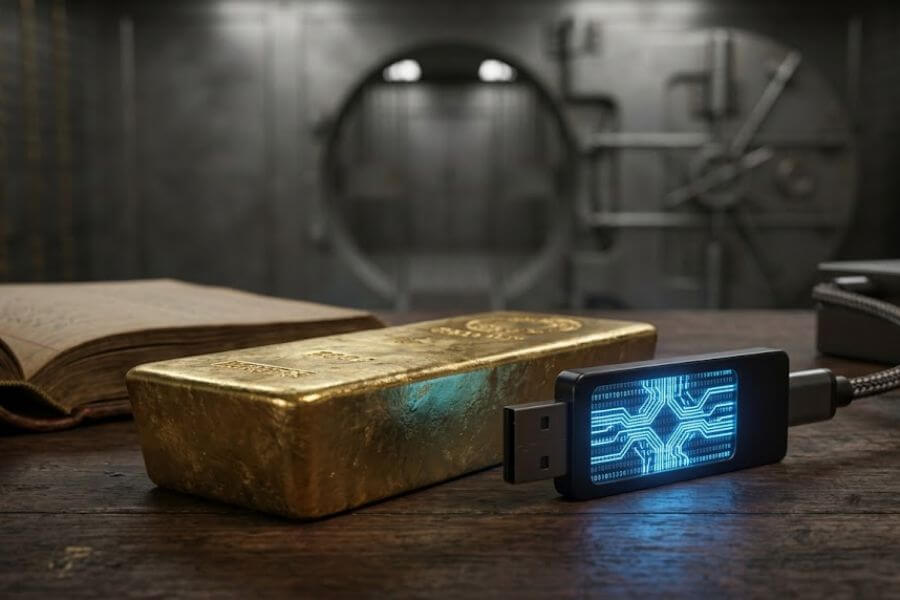
Gold has been a safe haven for wealth for thousands of years, but storing and moving it is a massive logistical headache. If you buy physical gold, you have to pay for a heavy safe, hire security, or pay a bank to hold it in a vault. With tokenization, companies lock pure gold bars securely inside highly protected vaults. They then issue digital gold tokens that represent the exact weight of that gold. You can buy a fraction of an ounce of gold on your phone, hold it securely, and even trade it for other assets instantly without ever needing to carry a heavy metal bar.
Treasury Bills and Government Debt
Governments around the world issue debt called Treasury bills to fund their operations. These are considered some of the safest investments in existence, but accessing them often requires specialized bank accounts and large sums of capital. Financial institutions are now tokenizing these government bonds. By placing them on a blockchain, they allow everyday savers to earn steady, safe yields that were previously reserved for giant corporations and sovereign funds.
Rare Art and Collectibles
Fine art by legendary painters has historically been a luxury plaything for billionaires. A single painting can sell for fifty million dollars at an auction. Tokenization breaks these masterpieces into thousands of digital pieces. A museum or a private collector can tokenize a famous painting, allowing art enthusiasts to own a piece of cultural history. As the painting appreciates in value over time, the value of the digital tokens rises right along with it.
Diverse Tokenized Markets
| Industry | Physical Asset | Digital Token Form | Major Benefit |
| Real Estate | Office buildings, family homes | Square-foot fractional tokens | Easy entry, monthly rental payouts |
| Commodities | Gold bars, silver, crude oil | Weight-backed digital certificates | No storage worries, instant global trading |
| Finance | Government bonds, corporate debt | Yield-bearing stable tokens | Safe savings options for everyday people |
| Art & Luxury | Classic oil paintings, rare cars | Shared ownership shares | Access to historic, high-value collections |
The Hurdles and Roadblocks We Must Cross
While the benefits of this financial revolution are massive, it is important to look at the situation honestly. Moving the entire world’s wealth onto digital networks is a monumental task, and there are several major challenges that builders are working hard to solve right now.
The first big hurdle is regulation and the law. Every country has its own set of rules regarding money, investments, and property ownership. A digital token can cross global borders in a fraction of a second, but legal systems do not move that fast. Regulators are still trying to figure out how to police these digital assets, protect consumers from scams, and ensure that tax laws are properly followed. Until we have clear, harmonious rules across the globe, growth will face friction.
The second challenge is technology and security. While blockchain networks are incredibly secure, the smart contracts written by humans can sometimes contain bugs or flaws. If a hacker finds a loophole in a smart contract’s code, they might find a way to drain funds or disrupt the tokens. The industry is responding by developing intense auditing practices, where third-party security teams check every single line of code before it goes live. Still, building bulletproof software takes time and continuous effort.
Finally, there is the hurdle of education and adoption. For the average person, words like blockchain, smart contracts, and digital wallets can sound overwhelming and confusing. People are naturally cautious when it comes to their hard-earned money. If the software tools are too complicated to use, the masses will stay away. Builders must focus on creating clean, intuitive interfaces that look and feel just like the banking apps we use today, hiding the complex tech beneath a smooth, friendly exterior.
Looking Into the Crystal Ball
As we move deeper into this digital era, the line between traditional finance and blockchain technology will blur until it disappears entirely. We are moving toward a world where your investment portfolio will not live in isolated bank accounts, but in a unified digital space. You will be able to manage your home equity, your gold savings, your stock options, and your art investments all from a single dashboard on your personal device.
This shift will trigger a massive wave of economic energy. Capital that was once locked up and stagnant in slow-moving physical assets will circulate freely through the global economy. Small businesses will have an easier time raising money by tokenizing their future revenues, and everyday people will have unprecedented tools to save, grow, and protect their wealth.
We are witnessing the birth of an open, global internet of value. Just like the early internet changed how we share information, photos, and ideas, tokenization is changing how we share and move value. It is an exciting journey that is democratizing finance, making the world smaller, and opening up a universe of opportunities for the next generation of investors.
Frequently Asked Questions
What exactly happens to the physical asset if the token company goes out of business?
The physical asset is legally protected by the structure created during the setup phase. Because the asset is usually held by an independent Special Purpose Vehicle (SPV) rather than the tokenization platform itself, the asset remains safe even if the platform goes under. The legal rights tied to your tokens mean you still own your piece of the underlying asset, and a court or trustee would handle the sale or transfer of the physical property to return the value back to the token holders.
Do I need to be a technology expert to buy and hold tokenized real world assets?
You do not need to know how to code or understand the deep mathematics of a blockchain to participate. Modern platforms are designing their systems to look exactly like standard online banking or shopping applications. You simply sign up, verify your identity, link a standard payment method, and buy your tokens with a few clicks. The complex blockchain mechanics happen quietly in the background without you ever needing to see them.
How do token holders receive profits or payouts from physical things like rental buildings?
The distribution of profits is fully automated through smart contracts. When tenants pay rent or an asset generates cash, that money is moved into the system and split up proportionally based on how many tokens each person owns. The digital funds are deposited directly into your digital wallet automatically, cutting out the need for a manual accounting team to cut checks or send individual wire transfers.
Can someone steal my physical asset by hacking into the blockchain network?
No, a hacker cannot physically steal a building or a vault of gold by messing with a computer network. The physical items remain safely locked in the real world under legal deeds and heavy security. A hack could only target the digital tokens themselves. To prevent this, platforms use institutional-grade security, regular third-party code reviews, and strict identity checks to ensure that digital ownership remains completely locked down and tied to the real, rightful owners.
Are tokenized assets legal and recognized by government authorities?
Yes, serious tokenization projects work directly within existing legal and financial frameworks. They register their offerings with financial regulators, conduct thorough identity checks on all participants, and use legally binding corporate structures to back up the tokens. Governments around the world are actively writing new, modern frameworks to fully support and govern these digital assets as the industry grows.